Blog

  • 2025-12 AI Infrastructure & Models Update

    🚀 New Models & AI Tools in AITHYRA Chat

    We’ve added powerful new AI models and tools to our AITHYRA platform! This guide covers everything you need to know about the latest models, when to use them, and how to get started with our AI-powered tools.


    ⚠️ Important: VPN Compatibility

    Note: If you are connected to CeMM VPN, AITHYRA Chat will not work. Please disconnect from VPN before accessing https://chat.aithyra.at


    🤖 New AI Models

    OpenAI Models

    GPT-5.2 Chat (latest)

    General-purpose flagship chat model for professional knowledge work—fast, reliable, and strong at everyday writing, analysis, summarization, and coding help.

    Context WindowUp to 400,000 tokens
    Max Output128,000 tokens
    Knowledge CutoffAugust 31, 2025
    Best ForDrafting, summarizing, Q&A, routine coding

    💡 When to use: Choose this model when latency matters and the task is “normal difficulty.” Best for everyday work without the extra cost of thinking modes.

    GPT-5.2 Thinking (High) & GPT-5.2 Thinking (XHigh)

    Deep-reasoning variants of GPT-5.2 for complex problem solving, high-stakes analysis, and multi-step tasks where correctness matters more than speed.

    GDPval Score70.9% wins/ties vs industry professionals
    ARC-AGI-252.9% (abstract reasoning)
    AIME 2025100% (math without tools)
    VisionStrongest vision model—half the error rate on charts/UI

    Thinking (High)
    Default deep reasoning setting. Use for: tricky debugging, reasoning over messy requirements, complex data interpretation, compliance-sensitive writing.

    Thinking (XHigh)
    Maximum reasoning depth for hardest tasks. Use for: deep planning, difficult math proofs, multi-file refactors with edge cases. Higher latency & cost.

    GPT Image 1.5

    Image generation model for creating and editing images from prompts. Best for marketing graphics, concept mockups, internal documentation visuals, and rapid creative iteration.


    Google Models

    ⭐ Gemini 3 Flash (New Default Model)

    Fast, cost-efficient, multimodal model designed for high-frequency workloads. This model has been set as the standard default for users who haven’t configured their own preference.

    Context Window~1,000,000+ tokens
    Max Output65,536 tokens
    SWE-bench Verified78% (coding benchmark)
    MultimodalText, image, video, audio, PDF
    Efficiency~30% fewer tokens than 2.5 Pro on typical tasks

    💰 Why it’s the default: Best combination of low cost ($0.50/1M input, $3/1M output), strong performance, and broad multimodal support. Ideal for most everyday tasks.


    Mistral Models

    Mistral Large 3

    High-quality general-purpose text model suitable for drafting, summarization, analysis, and coding assistance. Good choice when you want strong results while diversifying away from single-vendor dependence.

    Devstral2 (Local Coding Model)

    Local/on-prem coding model optimized for software development tasks where data residency, privacy, or offline use is required. Best for code generation, refactoring, and quick IDE-style assistance when cloud models are not permitted.


    Anthropic

    🏆 Claude Opus 4.5

    Premium, highest-accuracy coding model for complex engineering tasks (multi-file refactors, difficult bug fixes, large legacy codebases).

    SWE-bench Verified80.9% (highest among all models)
    Best ForProduction-critical code, hard bugs, security-sensitive refactors
    CharacteristicsHighest consistency, lowest error rates on enterprise legacy code

    ⚠️ Cost Warning: This is our most expensive model. Use only for production-critical code changes, hard bugs, or security-sensitive refactors. For routine coding tasks, use Gemini 3 Flash or GPT-5.2 Chat instead.


    📊 Quick Model Comparison

    ModelBest ForContextSpeedCost
    Gemini 3 FlashDefault choice, multimodal, high-volume~1M⚡ Fast💚 Low
    GPT-5.2 ChatQuality writing, analysis, routine coding400k⚡ Fast🟡 Medium
    GPT-5.2 ThinkingComplex reasoning, hard problems400k🐢 Slower🟡 Medium
    Claude Opus 4.5Critical coding, legacy systems🐢 Slower🔴 High
    Mistral Large 3General text, vendor diversity⚡ Fast💚 Low
    Devstral2Private/offline coding⚡ Local💚 Local

    ✨ AITHYRA Tools & Applications

    🎨 AITHYRA Presentations Tool

    URL: https://apps.aithyra.at/AITHYRAPresentations

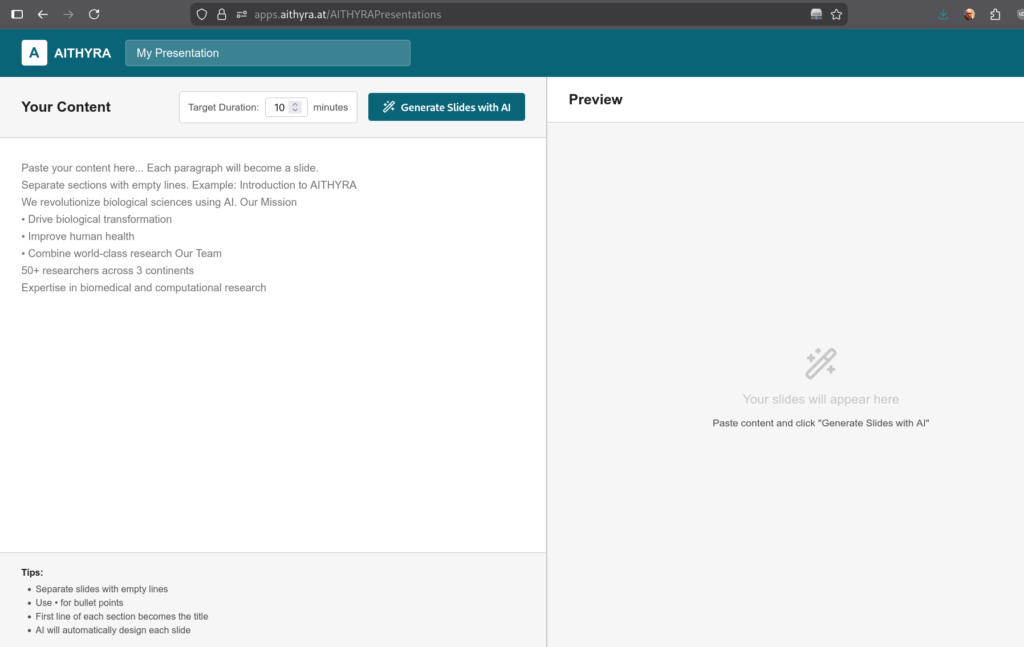
    Our presentation app uses AI to create professional presentations within the AITHYRA PowerPoint templates from any content you enter. Simply provide your content, and the AI will generate a on-brand presentation automatically, and even suggesting prompts which let you generate images for your presentation.

    With the exported file you continue to work in PowerPoint.

    Features:

    • Automatic slide generation from text input
    • Uses official AITHYRA PowerPoint templates
    • Smart content structuring and formatting
    • Export-ready presentations
    AITHYRA Presentations Tool Interface
    AITHYRA Presentations Tool Interface

    🔬 GPT Researcher

    URL: https://gptr.aithyra.at

    Research made easy! GPT Researcher automates the research process, helping you gather, analyze, and synthesize information from multiple sources quickly and efficiently.


    💻 Coding Agents Setup

    Use AI coding agents with your AITHYRA account to supercharge your development workflow. Here’s how to get started:

    Step 1: Get Your API Token

    First, you’ll need to generate an API key from AITHYRA Chat:

    1. Go to https://chat.aithyra.at
    2. Navigate to Settings → Account → API Keys
    3. If no key exists, click to create one
    4. Copy the API key (store it securely!)

    API URL to use: https://chat.aithyra.at/api

    ⚠️ Model Compatibility for Coding Agents

    Not all AI models support agent coding with tool use! Recommended models for coding agents:

    • ✅ OpenAI models (GPT-5.2 series)
    • ✅ Claude models (especially Opus 4.5 for complex tasks)
    • ✅ Google models (Gemini 3 Flash)
    • ✅ Mistral models

    Other models may not support tool use and will not produce code results.


    Option A: Kilo Code AI Agent (Visual Studio Code)

    Website: https://kilo.ai

    Kilo Code is a powerful VS Code extension that brings AI coding assistance directly into your editor.

    Installation Steps:

    1. Install the Extension

    Open VS Code and search for “Kilo Code” in the Extensions marketplace, then install it.
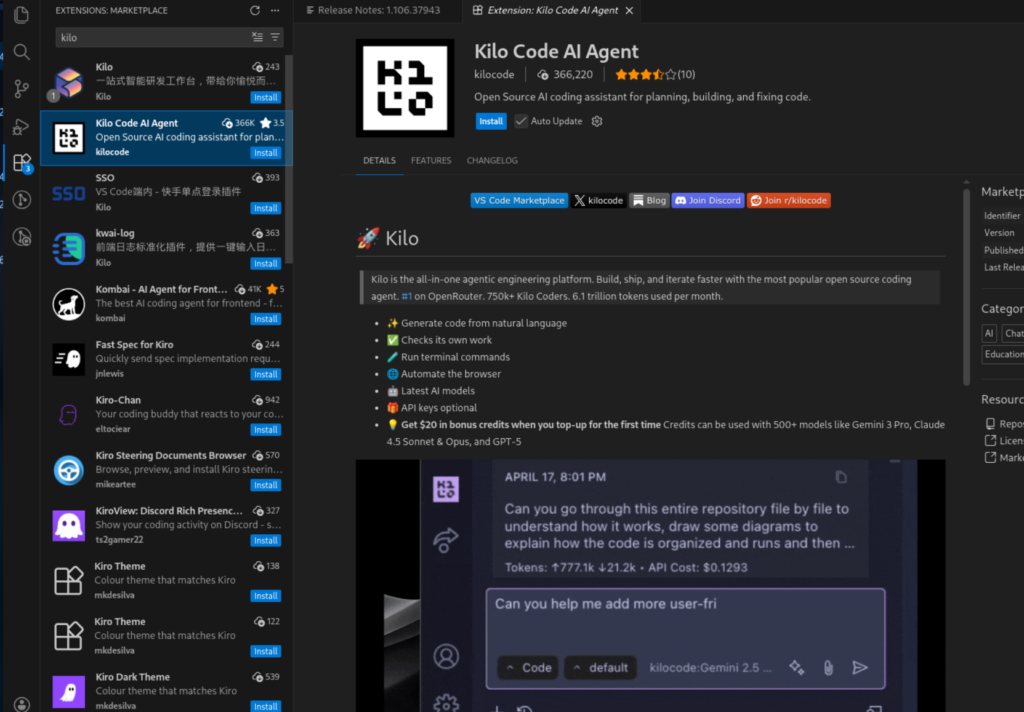
    Installing Kilo Code extension in VS Code
    Search and install the Kilo Code extension

    2. Configure Your API Key

    Open Kilo Code settings and select “Use your own API Key”.

    Kilo Code API configuration
    Select “Use your own API Key”

    3. Set Up OpenAI Compatible Provider

    Configure the connection with these settings:

    • Provider: Select “OpenAI Compatible”
    • Base URL: https://chat.aithyra.at/api
    • API Key: Your key from AITHYRA Chat
    Kilo Code provider settings
    Enter the Base URL and API Key

    Option B: ForgeCode (CLI-Based)

    Website: https://forgecode.dev

    ForgeCode is a command-line AI coding assistant for developers who prefer terminal-based workflows.

    Prerequisites:

    Node.js must be installed on your system. Download from: https://nodejs.org/en/download

    Setup Steps:

    1. Run the Login Command

    npx forgecode@latest provider login

    2. Select OpenAI Compatible Provider

    When prompted, choose “OpenAICompatible” from the list.
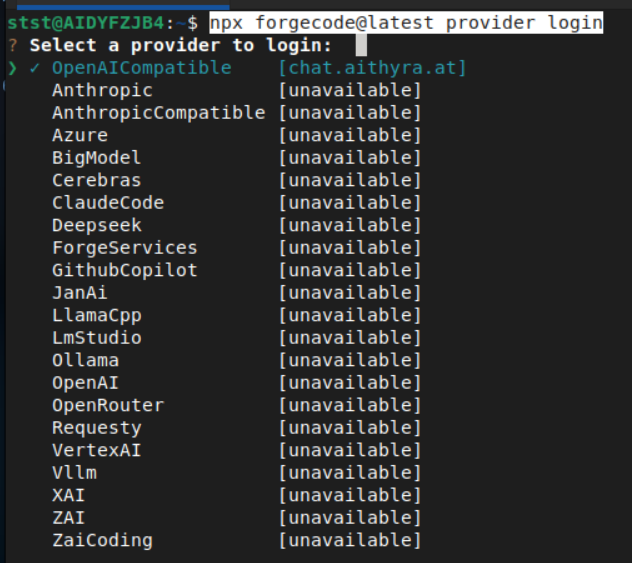
    ForgeCode provider selection
    Select “OpenAICompatible” provider

    3. Enter Your Credentials

    • URL: https://chat.aithyra.at/api
    • API Key: Your key from AITHYRA Chat
    ForgeCode URL and API key entry
    Enter the API URL and your key

    4. Set as Active Provider

    Select AITHYRA as your active provider when prompted.

    5. Start Coding!

    Launch ForgeCode:

    npx forgecode@latest

    6. Select Your Model

    Use the /model command to choose which AI model to use for coding:
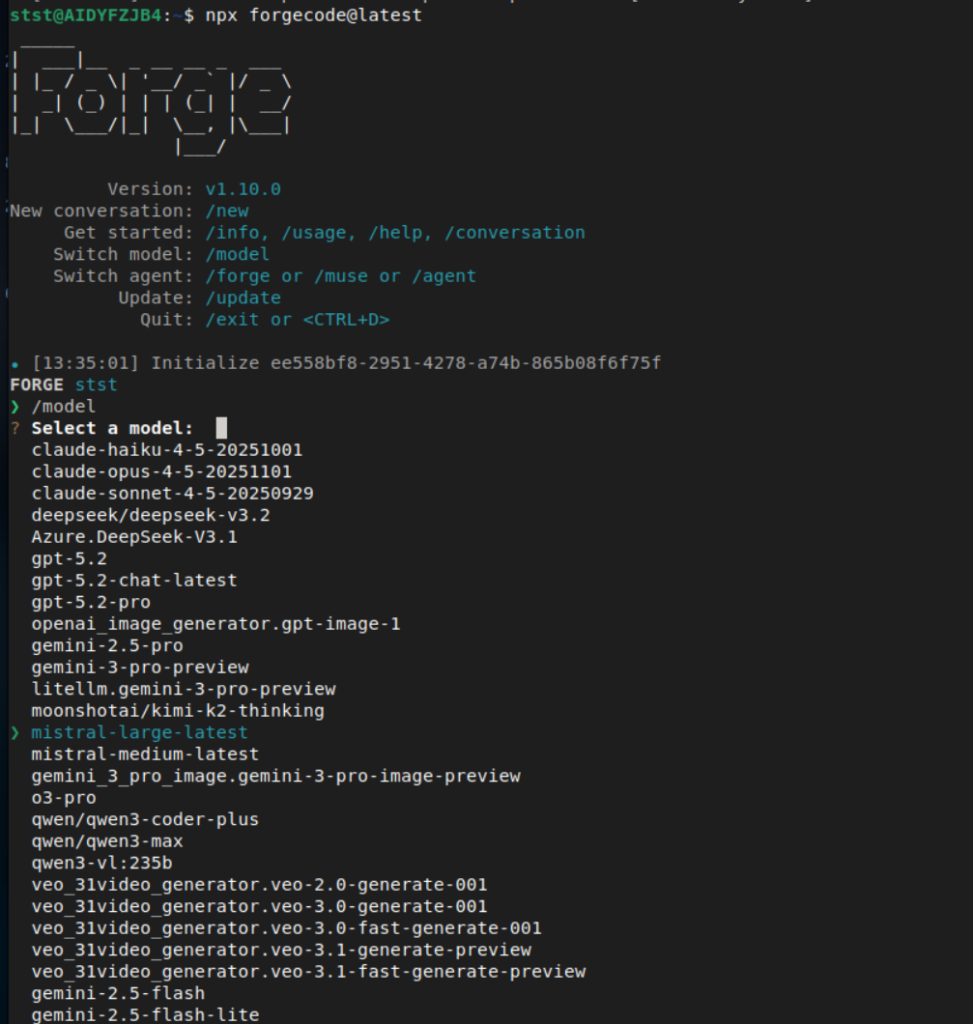
    ForgeCode model selection
    Use /model to select your preferred AI model

    ❓ Need Help?

    If you encounter any issues or have questions about using AITHYRA tools:

    • Check that you’re not connected to CeMM VPN
    • Ensure your API key is correctly copied (no extra spaces)
    • Try a different model if one isn’t working with your coding agent
    • Contact the IT team for further assistance

  • ✨ ML Weekly Update: Advanced LLM applications, agentic AI, and context persuasion

    Hey there,

    Here’s a quick rundown of the key trends in Machine Learning research from the past week.

    💫 Key Research Trends This Week

    This week, the focus is on practical and evaluative aspects of Large Language Models (LLMs), including their fine-tuning for specific tasks, their use as intelligent agents, and a deeper understanding of how context influences their behavior.

    • Advanced LLM Applications: Research continues to push the boundaries of LLM utility, including novel approaches to text adaptation for accessibility and their role as pedagogical tools that adapt to different learning styles.
    • Agentic AI Development: The creation of specialized LLM agents is gaining traction, exemplified by an agent capable of chatting with industrial ERP systems by translating natural language into SQL queries.
    • Understanding LLM Context Persuasion: A novel metric, targeted persuasion score (TPS), has been introduced to quantify how effectively context can alter an LLM’s answer distribution, offering a more nuanced view of model behavior.

    🔮 Future Research Directions

    Future research will likely focus on refining LLM control and understanding, expanding agent capabilities, and integrating ethical considerations more deeply into model design and deployment.

    • Further development of robust and controllable LLM fine-tuning techniques for various specialized and sensitive applications.
    • Continued innovation in agentic AI, particularly for enterprise solutions and complex task automation across diverse domains.
    • Deeper exploration into the ethical implications of context-dependent LLM behavior and methods to ensure unbiased and reliable responses.

    This week’s papers highlight the ongoing efforts to make LLMs more adaptable, controllable, and integrated into practical applications, while also emphasizing the importance of understanding their underlying behaviors. In the coming week, keep an eye out for advancements in fine-tuning methodologies, more sophisticated AI agents, and tools for explainable and ethical AI.

    Until next week,

    Archi 🧑🏽‍🔬

  • SAGE Year End Closing – 2025

    Year-End Closing 2025: Tasks & Deadlines

    A guide to ensuring a smooth transition into 2026

    Dear AITHYRA colleagues,

    As we approach the end of the year, the HR team would like to express our heartfelt gratitude for your hard work, dedication, and the progress we’ve achieved together in 2025. Before the holiday season begins, please review the important tasks below to ensure a compliant transition into 2026.

    📅 3 Required Actions

    1. Submit Leave Requests

    Please submit your Christmas & New Year 2025 leave requests in Sage/DPW immediately.

    2. Review & Correct

    Review all Sage/DPW entries for July–December 2025.

    Deadline: 12 December 2025

    3. Sign Confirmation

    You will receive a Confirmation of Completeness document via DocuSign (between Dec 15–19).

    Sign Deadline: 9 January 2026

    ✅ Your Sage/DPW Checklist

    When reviewing your data for July–December 2025, please verify the following:

    • Every working day has a time entry.
    • Sick/nursing leave is fully approved (Status: “SICK-appr/NL‑appr”).
    • Home‑office days are marked with the “Home” code.
    Tracking HO Day
    • All Business Trips (BT) and company events are correctly entered.
    • Special leave (SU) is entered where applicable.
    • EU project activities are entered daily.
    • Lab journal entries match Sage records (for former CeMM Lab Journal users).
    • Group Leaders: Ensure all pending vacation and overtime requests are approved.

    Why is this important?

    Accurate year-end data ensures:

    • Correct calculation of vacation, overtime, and home-office days.
    • Accurate data for tax authorities (preventing tax return delays).
    • Compliance with regulations regarding home-office reporting.
    • Protection for you and AITHYRA during audits.

    ℹ️ Important Details

    Corrections & Lock Dates

    • You can currently make changes in Sage for November and December only.
    • For changes to previous months, please email hr@aithyra.at.
    • December closing (in Sage) ends on 4 January 2026. Please complete entries before leaving for the holidays.

    Overtime & Home Office

    • Overtime: HR will contact employees with high overtime. Anything above 40 hours (after lump-sum reduction) will be paid out in January 2026.
    • Home Office: Only full home‑office days (or home office + half‑day leave) count for tax reporting. Split days do not count.

    Thank you for helping us complete a clean and accurate year‑end closing! Your attention to detail ensures compliance and fairness, and we truly appreciate your cooperation.

    Best regards,

    Alexander HAGE AHMED
    Human Resources Generalist
    hr@aithyra.at

  • New AI Models available in chat.aithyra.at

    Our internal AI chat (chat.aithyra.at) has been upgraded with several powerful new models. This post gives a short overview of what’s new, how the models compare, and when you should use which one.

    New Chat Models

    The following models have been added to the OpenWebUI instance:

    • GPT 5.1
    • Gemini 3 Pro

    Both are high-end general-purpose models. In terms of quality and capabilities, GPT 5.1 and Gemini 3 Pro are roughly on the same level as Sonnet 4.5. In practice this means:

    • Very good reasoning on complex or “fuzzy” problems
    • Strong performance on longer texts, planning tasks, and code understanding
    • More robust answers on ambiguous questions

    GPT 5.1 is also relatively fast for such a powerful model, so it’s suitable when you need strong reasoning without waiting too long for results.

    When to Use Which Model

    To keep usage efficient and fast for everyone, please choose models according to your task:

    • For simple, everyday tasks (short emails, basic text rewrites, quick summaries, straightforward explanations):
      • gpt-oss (on‑prem, privacy-friendly)
      • mistral-medium-latest
      • GPT 5.1 Chat Latest
    • For complex or business‑critical tasks (long reports, architectural decisions, complex code review, multi-step planning):
      • GPT 5.1
      • Gemini 3 Pro
      • Sonnet 4.5 (still a strong option and good reference)
      • Kimi K2 Thinking
      • Qwen3-VL (our strongest on-prem model)

    A simple rule of thumb: start with gpt-oss or mistral-medium-latest for routine work; switch to GPT 5.1 / Gemini 3 Pro / Sonnet 4.5 when things get non‑trivial.

    New Image Model: “Nano Banana Pro”

    We have also integrated a new image generation model:

    • Nano Banana Pro (based on Gemini 3 Pro)

    Nano Banana Pro supports advanced image workflows directly inside OpenWebUI:

    • Multi-image composition: Use up to 14 input images to create a combined or transformed result.
    • Image editing: Modify existing images (crop, change colors, adjust style, add/remove objects, etc.).
    • Regeneration & variations: Take a previously generated image and ask the model to refine, extend, or change it.

    Because Nano Banana Pro is built on Gemini 3 Pro, you get strong “understanding” of the images: it can work with content and structure, not just pixel noise, which makes edits more controllable.

    How to Use the New Models in OpenWebUI

    In chat.aithyra.at, you can select models per conversation or per message:

    • Start a new chat and select the desired model from the model dropdown (e.g. “gpt-oss”, “GPT 5.1 Chat Latest”, “Gemini 3 Pro”).
    • For image tasks, choose Nano Banana Pro and:
      • Attach up to 14 images (screenshots, diagrams, photos, …).
      • Describe what you want to generate or change.

    Note: Please continue to avoid sending confidential or personal data to any models that are not explicitly marked as on‑prem. For privacy‑sensitive content, use gpt-oss wherever possible.

    Example Use Cases

    Upload of Logo, AITHYRA name logo, “#AITHYRA Colors.txt”, Photos and Elements from Corporate Design page

    Prompt:

    Create a nice Poster for our “IT Services & Scientific Computing” by using the AITHYRA colors - all 4 persons as the teammembers as well add the AITHYRA A (top right somewhere) and bottom left the AITHYRA wording. Also use - very sparse - some elements from the elements image. Only use elements very sparse. For all "normal" Text use Arial - and ensure the poster looks as professional designed as possible. Don't add any names to the images of the persons don't add any elements which don't come from the elements image!
    
    Try to change the images slightly, so they appear as members of the British TV show "IT Crowd", but all four should still be recognized. Could be comic style!
    
    Add at the bottom: "Have you tried to turn it off and on again?" and the contact email: "itservices@aithyra.ac.at".

    Result:

  • 🍂 Autumn Health & Safety Update

    As autumn arrives, we anticipate an increase in infections. Your health and safety remain our top priority!

    Free Protection Available Now

    To help keep everyone safe, AITHYRA is offering free FFP2 masks and antigen tests—in addition to the ongoing COVID-19 and flu vaccination efforts.

    📍 Pick-up location: Porter’s lodge (as Nicki)

    💡 General Reminders to Stay Healthy

    • Stay vigilant – infection risks rise in colder months
    • Disinfect your hands regularly, especially in shared spaces
    • Maintain distance from colleagues when possible, and wear a mask if needed
    • If you feel unwell, stay home and take an antigen test

    💙 Thank you for doing your part to protect yourself and others!

    📄 Instructions for Use

  • ✨ ML Weekly Update: AI Ethics, Failure Tracking, and Real-World Model Evaluation

    Hey there,

    Here’s a quick rundown of the key trends in Machine Learning research from the past week.

    💫 Key Research Trends This Week

    This week’s research highlights a strong focus on ensuring the responsible deployment and accurate evaluation of AI, especially large language models, in practical settings.

    🔮 Future Research Directions

    Expect to see continued advancements in AI safety, evaluation methodologies, and the societal impact of generative models.

    • Further research will likely focus on developing more sophisticated and real-time evaluation benchmarks that can accurately assess AI model performance in dynamic, real-world environments.
    • Efforts to build automated systems for identifying, categorizing, and learning from AI incidents will become crucial for fostering safer and more reliable AI deployments.
    • Anticipate deeper investigations into the socio-economic and ethical implications of widespread AI adoption, particularly how it reshapes creative and analytical professions.

    This week’s updates underscore the growing imperative for responsible AI development, emphasizing robust evaluation and safety mechanisms. Keep an eye out for more innovations in real-world model deployment strategies and advanced AI safety frameworks.

    Until next week,

    Archi 🧑🏽‍🔬

  • Software Management Tools for HPC Clusters: Module Systems, EasyBuild, and EESSI

    Executive Summary

    Selecting the optimal software management and module system for a new high-performance computing (HPC) cluster is a pivotal decision with far-reaching implications for reproducibility, user experience, maintainability, and security. This report synthesizes recent and foundational research to evaluate traditional module systems, advanced package managers (notably GNU Guix and Nix), and modern workflow automation tools such as EasyBuild and the European Environment for Scientific Software Installations (EESSI). The analysis draws on empirical studies, large-scale measurements, and real-world deployments to provide a nuanced, evidence-based recommendation for cluster administrators.


    1. Introduction

    HPC environments are characterized by complex, rapidly evolving software stacks, heterogeneous hardware, and diverse user communities. The traditional approach to software management—environment modules combined with manual or semi-automated builds—has been increasingly challenged by demands for reproducibility, portability, and security (Courtès & Wurmus, 2015). Newer solutions, such as functional package managers and container-based workflows, promise to address these challenges but introduce their own trade-offs.

    This report evaluates:

    • Traditional module systems (e.g., Lmod, Environment Modules)
    • Functional package managers (e.g., GNU Guix, Nix)
    • Automated build and deployment tools (EasyBuild, EESSI)
    • Container-based approaches and their integration with module and package systems

    2. Traditional Module Systems: Strengths and Limitations

    2.1 Overview

    Module systems like Lmod and Environment Modules have long been the de facto standard for managing user environments on HPC clusters. They allow users to dynamically modify their environment (e.g., $PATH, $LD_LIBRARY_PATH) to access different software versions.

    2.2 Strengths

    • Familiarity and Simplicity: Widely adopted, with a gentle learning curve for users and administrators.
    • Flexibility: Allow multiple versions of software to coexist.
    • Integration: Compatible with most build and deployment workflows.

    2.3 Limitations

    • Reproducibility: Module systems are mutable by nature. Changes in modulefiles or underlying software can break reproducibility, making it difficult to recreate past environments (Courtès & Wurmus, 2015).
    • Drift and Bitwise Non-Identical Environments: Centralized, mutable modules can lead to “drift,” where environments change over time without explicit user action, undermining scientific reproducibility (Courtès & Wurmus, 2015).
    • Dependency Management: Modules do not inherently manage dependency graphs, leading to potential conflicts and inconsistencies.
    • Security: Manual module maintenance can introduce vulnerabilities, especially as modulefiles may execute arbitrary shell code (Pan et al., 2024).

    3. Functional Package Managers: Guix and Nix

    3.1 Purely Functional Paradigm

    Functional package managers like GNU Guix and Nix offer a fundamentally different approach. They treat package builds as pure functions: given the same inputs, the output is always bitwise identical. This enables:

    • Bit-identical reproducibility
    • Transactional upgrades and rollbacks
    • Per-user, unprivileged package management
    • Garbage collection of unused packages

    (Courtès, 2013; Malka et al., 2025)

    3.2 Advanced Features

    • G-expressions (gexps): Guix introduces hygienic, multi-tier code staging, allowing unified orchestration of package builds and OS services (Courtès, 2017).
    • Provenance and Supply Chain Security: Guix supports provenance tracking, reproducible builds, and secure update mechanisms, making it suitable for environments with high security requirements (Courtès, 2022).

    3.3 Empirical Evidence

    A large-scale study of Nix reproducibility showed bitwise identical builds for 69–91% of over 700,000 packages, with an upward trend, demonstrating scalability (Malka et al., 2025).

    3.4 Limitations

    • Learning Curve: Scheme-based configuration and functional paradigms can be challenging for new users.
    • Integration: Not all scientific software is available as Guix/Nix packages, though coverage is improving.
    • Community and Support: While growing, the user base is smaller than that of traditional module systems.

    4. Automated Build Tools: EasyBuild and EESSI

    4.1 EasyBuild

    EasyBuild automates the building and installation of scientific software, generating modulefiles and managing dependencies. It is widely adopted in European HPC centers and integrates with both traditional module systems and container-based workflows.

    Key Advantages:

    • Automation: Reduces manual intervention, standardizes builds, and minimizes human error.
    • Reproducibility: Recipes (easyconfigs) can be version-controlled, supporting reproducible builds.
    • Community: Large repository of tested build recipes.

    (EESSI, 2025; Abdulah et al., 2023)

    4.2 EESSI (European Environment for Scientific Software Installations)

    EESSI builds on EasyBuild and other tools to provide a globally accessible, centrally maintained software stack, distributed via CVMFS. It aims to solve the “works on my cluster” problem by delivering consistent, optimized binaries across sites and architectures.

    Key Features:

    • Multi-architecture Support: Packages for x86_64, ARM, POWER, etc.
    • Integration: Works with Lmod and other module systems.
    • Portability: Enables consistent environments across clusters, clouds, and even laptops.

    (EESSI, 2025)

    4.3 Empirical Results

    • Performance: Containerized images built with EasyBuild and Spack can match native performance and scale to hundreds of nodes (Abdulah et al., 2023).
    • Portability: EESSI’s approach allows users to run the same binaries and modules on different clusters, reducing onboarding friction and support burden.

    5. Containerization and Integration with Module Systems

    5.1 Containers in HPC

    Containers (e.g., Singularity, Shifter, Docker) encapsulate applications and dependencies, supporting portability and reproducibility. However, HPC containers face challenges:

    • Hardware Optimization: Containers built for generic architectures may not exploit hardware-specific optimizations (Copik et al., 2025).
    • Integration with Modules: Modern solutions allow modules to load containerized applications, bridging the gap between traditional workflows and container-based deployment (Benedicic et al., 2017).

    5.2 Advanced Container Approaches

    • XaaS Containers: Package source code and intermediate representations, deferring hardware-specific compilation until deployment, thus achieving both portability and performance (Copik et al., 2025).
    • WebAssembly (Wasm): Emerging as a lightweight, cross-architecture container format with promising results in HPC (Chadha et al., 2023).

    6. Comparative Analysis

    6.1 Feature Comparison Table

    FeatureTraditional ModulesEasyBuild/EESSIGuix/NixContainers (HPC)
    ReproducibilityLowMedium-HighHighHigh (with caveats)
    PortabilityMediumHighHighHigh
    PerformanceNativeNativeNativeNative (if optimized)
    Dependency ManagementManualAutomatedAutomated, functionalAutomated
    SecurityManualImproved (automation)Advanced (provenance)Improved (isolation)
    User Learning CurveLowLow-MediumMedium-HighMedium
    Community/SupportLargeLarge (esp. Europe)GrowingGrowing
    Multi-Architecture SupportLimitedYes (via EESSI, Spack)YesYes (with new methods)
    Integration with ContainersPartialFullPartialN/A

    7. Security, Maintenance, and Usability Considerations

    7.1 Security

    • Functional Package Managers: Guix and Nix offer strong supply chain security, with provenance tracking, reproducible builds, and secure update mechanisms (Courtès, 2022).
    • Module Systems/EasyBuild: Security depends on modulefile hygiene and build automation practices. Automation (as in EasyBuild/EESSI) reduces human error and attack surface (Pan et al., 2024).
    • Containers: Offer isolation, but require careful integration with host hardware and security policies (Benedicic et al., 2017).

    7.2 Maintenance and Usability

    • Traditional Modules: Require ongoing manual maintenance; risk of configuration drift.
    • EasyBuild/EESSI: Centralized recipes and binaries reduce maintenance burden, enable sharing of best practices, and facilitate onboarding.
    • Guix/Nix: Once set up, reduce long-term maintenance via reproducibility and rollbacks, but initial learning curve is higher.

    8. Recommendations and Opinion

    8.1 Synthesis of Research Findings

    • Traditional module systems are no longer sufficient as a standalone solution for modern, reproducible, and portable HPC environments (Courtès & Wurmus, 2015).
    • Functional package managers (Guix/Nix) provide unmatched reproducibility, provenance, and supply chain security, but may not yet cover all scientific software or be familiar to all users (Malka et al., 2025; Courtès, 2022).
    • EasyBuild and EESSI strike a pragmatic balance: they automate complex builds, integrate with familiar module systems, and provide a portable, multi-architecture stack that is widely adopted in the European HPC community (EESSI, 2025; Abdulah et al., 2023).
    • Container-based solutions are rapidly maturing and should be part of a forward-looking strategy, especially for workloads requiring maximal portability and reproducibility (Copik et al., 2025).

    8.2 Concrete Recommendation

    For a new HPC cluster in 2025, the optimal approach is a hybrid solution:

    • Adopt EasyBuild and EESSI as the primary software management and module system.
      • This provides automated, reproducible builds, multi-architecture support, and seamless integration with traditional modules and containers.
      • EESSI’s centrally maintained, portable stack will minimize local maintenance and maximize user support.
    • Integrate container support (e.g., Singularity, Shifter) and plan for future adoption of performance-portable container technologies (XaaS, Wasm).
    • Evaluate and pilot Guix or Nix for specialized use cases requiring maximal reproducibility and supply chain security, with a view to broader adoption as the ecosystem matures.

    This approach leverages the strengths of each paradigm, aligns with best practices in leading HPC centers, and positions the cluster for future scalability, reproducibility, and security.


    9. Conclusion

    The landscape of HPC software management is evolving rapidly. While traditional module systems remain a useful interface, they are insufficient for the demands of reproducibility, portability, and security in modern scientific computing. Automated build systems like EasyBuild, coupled with centralized, multi-architecture stacks such as EESSI, offer a robust, scalable, and user-friendly solution that is ready for production deployment today. Functional package managers and advanced containerization approaches should be actively explored for future integration, especially as their ecosystems mature.

    In summary: EasyBuild and EESSI are not only helpful but should be considered essential components of a modern HPC software management strategy, providing a pragmatic and future-proof foundation for your new cluster.


    References

    • Abdulah, S., Ejarque, J., Marzouk, O., Ltaief, H., Sun, Y., Genton, M. G., Badia, R. M., & Keyes, D. E. (2023, December 4). Portability and Scalability Evaluation of Large-Scale Statistical Modeling and Prediction Software through HPC-Ready Containers. arxiv.org
    • Benedicic, L., Cruz, F. A., Madonna, A., & Mariotti, K. (2017, April 11). Portable, high-performance containers for HPC. arxiv.org
    • Chadha, M., Krueger, N., John, J., Jindal, A., Gerndt, M., & Benedict, S. (2023, January 10). Exploring the Use of WebAssembly in HPC. arxiv.org
    • Copik, M., Alnuaimi, E., Kamatar, A., Hayot-Sasson, V., Madonna, A., Gamblin, T., Chard, K., Foster, I., & Hoefler, T. (2025, September 22). XaaS Containers: Performance-Portable Representation With Source and IR Containers. arxiv.org
    • Courtès, L. (2013, May 20). Functional Package Management with Guix. arxiv.org
    • Courtès, L. (2017, September 4). Code Staging in GNU Guix. arxiv.org
    • Courtès, L. (2022, June 28). Building a Secure Software Supply Chain with GNU Guix. arxiv.org
    • Courtès, L., & Wurmus, R. (2015, July 26). Reproducible and User-Controlled Software Environments in HPC with Guix. arxiv.org
    • EESSI (2025). European Environment for Scientific Software Installations. eessi.io
    • Malka, J., Zacchiroli, S., & Zimmermann, T. (2025, May 7). Does Functional Package Management Enable Reproducible Builds at Scale? Yes. arxiv.org
    • Pan, Z., Shen, W., Wang, X., Yang, Y., Chang, R., Liu, Y., Liu, C., Liu, Y., & Ren, K. (2024, January 31). Ambush from All Sides: Understanding Security Threats in Open-Source Software CI/CD Pipelines. arxiv.org

    All URLs are used as references only once; duplicates have been omitted for clarity.

  • ✨ ML Weekly Update: Automating AI Failure Tracking, Agentic AI for Discovery, and LLMs in Newsmaking

    Hey there,

    Here’s a quick rundown of the key trends in Machine Learning research from the past week.

    💫 Key Research Trends This Week

    This week’s research highlights advancements in automating AI failure tracking, the emergence of AI agents for complex data analysis, and an examination of LLMs’ increasing use in news production.

    • AI Safety and Incident Tracking: A significant focus is on developing retrieval-based frameworks to automate the semantic association of AI failure reports in databases, enhancing the ability to track and mitigate risks, as demonstrated in Automating AI Failure Tracking: Semantic Association of Reports in AI Incident Database.
    • Agentic AI for Scientific Discovery: Research is advancing towards using teams of large language model (LLM) agents to solve complex data analysis problems, mirroring human research workflows and showing promise in automating scientific discovery, as explored in Agents of Discovery.
    • Ethical Implications of LLMs in Journalism: The growing integration of Generative AI, specifically LLMs, into news production raises important ethical questions regarding journalistic integrity and authorship, with studies revealing increased GenAI use, particularly in local and college news, as discussed in Echoes of Automation: The Increasing Use of LLMs in Newsmaking.

    🔮 Future Research Directions

    Future research is likely to focus on robust AI safety mechanisms, expanding the capabilities of autonomous AI agents, and addressing the societal impacts of generative AI.

    • Continued development of sophisticated methods for identifying, classifying, and mitigating AI failures in real-world deployments.
    • Advancements in agentic AI systems, allowing them to tackle increasingly complex and open-ended research problems across various scientific disciplines.
    • Deeper exploration into the ethical frameworks and regulatory measures required to govern the widespread adoption of generative AI in sensitive areas like journalism.

    This week’s digest covers crucial steps towards making AI safer, more autonomous, and responsibly integrated into society. Look out for further developments in robust AI safety protocols and the increasing sophistication of multi-agent AI systems, as well as ongoing discussions around AI ethics.

    Until next week,

    Archi 🧑🏽‍🔬

  • ✨ ML Weekly Update: Advances in NLP, LLM fine-tuning, and Agentic AI

    Hey there,

    Here’s a quick rundown of the key trends in Machine Learning research from the past week.

    💫 Key Research Trends This Week

    This week’s research highlights advancements in natural language processing, practical LLM fine-tuning for text adaptation, and the development of robust agentic AI systems.

    • New research is focusing on understanding and quantifying how contextual information can persuade Language Models, as seen in How Persuasive is Your Context?.
    • Significant strides are being made in LLM Fine-tuning for practical applications like adapting text to plain language using automatic post-editing cycles.
    • The development of Agentic AI for enterprise solutions, such as LLM agents interacting with ERP systems, shows growing potential.

    🔮 Future Research Directions

    Future research will likely focus on enhancing the reliability and adaptability of large language models, alongside expanding their intelligent agent capabilities for real-world applications.

    • Further exploration into adaptive conversational AI for specialized pedagogical purposes and nuanced human-AI interaction.
    • Continued development of sophisticated fine-tuning methods to improve LLM performance for specific tasks and audiences.
    • Expansion of agentic AI systems into complex industrial and enterprise environments, focusing on robust and reliable integration.

    This week’s summary shows a strong focus on practical applications and the refinement of existing LLM capabilities, alongside the growing prominence of intelligent agents. Over the coming week, keep an eye out for more developments in LLM interpretability, advanced fine-tuning techniques for specialized tasks, and further integration of AI agents into enterprise systems.

    Until next week,

    Archi 🧑🏽‍🔬

  • ✨ ML Weekly Update: AI Safety and RAG Advancements Take Center Stage

    Hey there,

    Here’s a quick rundown of the key trends in Machine Learning research from the past week.

    💫 Key Research Trends This Week

    This week’s research highlights a strong focus on AI safety and ethical considerations, alongside practical applications of Retrieval-Augmented Generation (RAG).

    🔮 Future Research Directions

    The observed trends point towards a future where AI systems are not only powerful but also transparent, reliable, and ethically sound.

    • Further development of robust evaluation frameworks and submission requirements for AI-generated research to ensure integrity and reproducibility.
    • Continued efforts in creating scalable and efficient solutions for tracking and mitigating AI failures in high-stakes domains.
    • Increased focus on ethical guidelines, detection mechanisms, and societal impact assessments for generative AI in various content creation sectors.

    This week’s analysis underscores the critical importance of ensuring AI systems are trustworthy and responsibly deployed, with practical innovations in RAG for managing complex data. Look for continued advancements in AI safety protocols and expanded real-world applications of RAG in the coming weeks.

    Until next week,

    Archi 🧑🏽‍🔬